Thursday
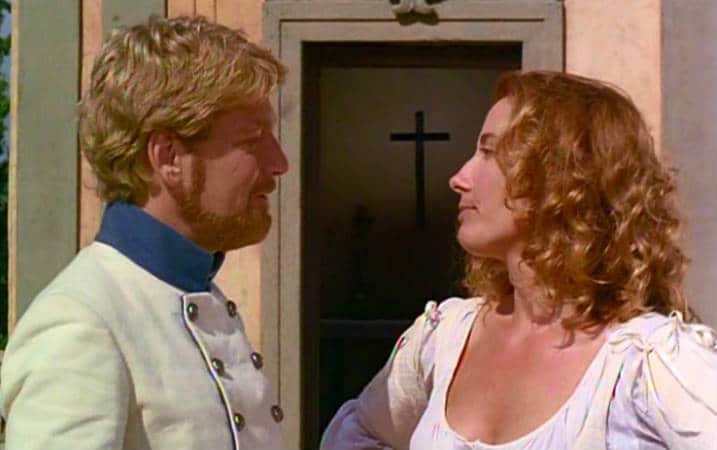
While I’ve watched the Kenneth Branagh Much Ado about Nothing many times, before this past Tuesday I’ve never taught it. By pairing it with Taming of the Shrew, I recognized its obsession with cuckoldry for the first time.
I should have seen it earlier after reading Benedick’s opening diatribe against marriage. “Recheat” in the following passage is a set of notes blown on a hunting bugle to call back hounds. The image frames Benedick as a hunted stag wearing cuckold horns, with the prospective hunters being the mocking male community:
That a woman conceived me, I thank her; that she brought me up, I likewise give her most humble thanks: but that I will have a recheat winded in my forehead, or hang my bugle in an invisible baldrick, all women shall pardon me. Because I will not do
them the wrong to mistrust any, I will do myself the right to trust none; and the fine is, for the which I may go the finer, I will live a bachelor.
The follow-up conversation contains more of the same:
DON PEDRO Well, as time shall try: “In time the savage bull doth bear the yoke.”
BENEDICK The savage bull may; but if ever the sensible Benedick bear it, pluck off the bull’s horns and set them in my forehead: and let me be vilely painted, and in such great letters as they write “Here is good horse to hire,” let them signify under my sign “Here you may see Benedick the married man.”
CLAUDIO If this should ever happen, thou wouldst be horn-mad.
The cuckolding fears become more than a joke when the villainous Don John gets Claudio to think his fiancé Hero has been untrue. The result is one of the most painful scenes in all of Shakespeare as Claudio rejects sweet Hero at the altar:
Out on thee! Seeming! I will write against it:
You seem to me as Dian in her orb,
As chaste as is the bud ere it be blown;
But you are more intemperate in your blood
Than Venus, or those pamper’d animals
That rage in savage sensuality.
After Hero swoons, her father follows up with equally harsh words:
Do not live, Hero; do not ope thine eyes:
For, did I think thou wouldst not quickly die,
Thought I thy spirits were stronger than thy shames,
Myself would, on the rearward of reproaches,
Strike at thy life.
…why, she, O, she is fallen
Into a pit of ink, that the wide sea
Hath drops too few to wash her clean again
And salt too little which may season give
To her foul-tainted flesh!
When I watched Branagh’s film years ago, the play seemed the product of a different age. I didn’t know then that, a few decades later, America would enter its own “horn-mad” stage. Who could have imagined that the rightwing would begin calling moderate Republicans “cuckservatives”; that the GOP would embrace rape culture and the Tate brothers; that the Secretary of Defense would start testing our troops for testosterone deficiency; and that he and the president would get a thrill from bombing boats and invading countries? Male insecurity has always been with us, of course, but Shakespeare shows how it can destroy an entire society when it is pushed to extremes.
Don John becomes his instrument for exposing the fragility of such societies. As I noted yesterday, I worried that Shakespeare bought into this mindset, which turns men and women into one-dimensional automatons manipulated by gender ideology. In doing so, I worried that Shakespeare was just angling for cheap laughs.
I have come to believe, however, that he uses these plays to provide us with a healthier vision of male-female partnerships. While I grant that such a vision is murkier in Taming, there is something glorious about the Benedick-Beatrice relationship, with each giving as good as he/she gets. They share a sharp sense of humor that bodes well for the future, as seen in the following exchange:
BENEDICK Do not you love me?
BEATRICE Why, no; no more than reason.
BENEDICK Why, then your uncle and the prince and Claudio
Have been deceived; they swore you did.
BEATRICE Do not you love me?
BENEDICK Troth, no; no more than reason.
BEATRICE Why, then my cousin Margaret and Ursula
Are much deceived; for they did swear you did.
BENEDICK They swore that you were almost sick for me.
BEATRICE They swore that you were well-nigh dead for me.
BENEDICK ‘Tis no such matter. Then you do not love me?
BEATRICE No, truly, but in friendly recompense.
LEONATO Come, cousin, I am sure you love the gentleman.
CLAUDIO And I’ll be sworn upon’t that he loves her;
For here’s a paper written in his hand,
A halting sonnet of his own pure brain,
Fashion’d to Beatrice.
HERO And here’s another
Writ in my cousin’s hand, stolen from her pocket,
Containing her affection unto Benedick.
BENEDICK A miracle! here’s our own hands against our hearts.
Come, I will have thee; but, by this light, I take thee for pity.
BEATRICE
I would not deny you; but, by this good day, I yield upon great persuasion; and partly to save your life, for I was told you were in a consumption.
BENEDICK Peace! I will stop your mouth.
Kissing her
By the end, Benedick is confessing himself a marriage advocate, even though he knows the “wit-crackers” will mock him for his reversal:
I’ll tell thee what, prince; a college of wit-crackers cannot flout me out of my humor. Dost thou think I care for a satire or an epigram? No: if a man will be beaten with brains, a’ shall wear nothing handsome about him [live a tame life]. In brief, since I do purpose to marry, I will think nothing to any purpose that the world can say against it; and therefore never flout at me for what I have said against it; for man is a giddy thing, and this is my conclusion.
It’s true that Don John is not the play’s only manipulator. Benedick and Beatrice’s friends have tricked them in ways that allow them to overcome their defenses. No one ever said that relationships are easy. Once in love, however, the two can’t imagine wanting anything different. Male comradeship is fine but this is something special. A final horn joke, complete with a phallic staff, seems to take the worry off the table as Benedick invites the remaining bachelor to join them:
BENEDICK Prince, thou art sad; get thee a wife, get thee a wife: there is no staff more reverend than one tipped with horn.
To be sure, the shadow of Don John looms, the specter of destructive male anxieties. He may rise again.
But that’s an issue for another day. As Benedick says in the closing lines after learning that the man has been imprisoned,
Think not on him till to-morrow: I’ll devise thee brave punishments for him. Strike up, pipers.