Sometimes, like Mr. Hardcastle in “She Stoops to Conquer,” one needs a break from the world’s news.
Fielding satiric attacks on the cheats of his day could apply to Wall Street financiers and other wealthy Americans who refuse to share.
America is in many ways like the stage coach rides described by Samuel Johnson and Henry Fielding.
Bloggers are facing confusion about rules similar to that faced by early novelists.
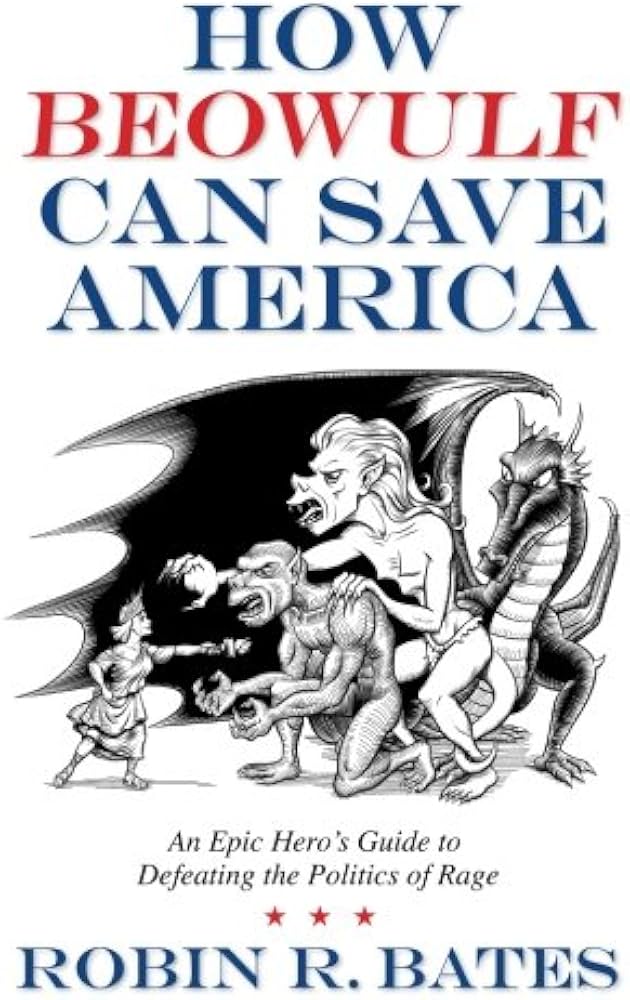
Responding to election day loss, will we be calm like Henry Fielding or in agony like Grendel?
As I watched the amazing day of baseball last Wednesday, I found myself thinking (being the literature nerd that I am) that the English novel was invented to do justice to reality when it got this dramatic and complex.
Posted in Defoe (Daniel), Dickens (Charles), Fielding (Henry), Sterne (Lawrence) | Also tagged Baseball, Charles Dickens, Daniel Defoe, Lawrence Sterne, Robinson Crusoe, Sports, Tom Jones, Tristram Shandy |
Homer gains Fielding’s admiration by his ability to move seamlessly between epic grandeur and “the shameless dog of the belly.” Perhaps it is Homer’s dexterity that gives Fielding the idea for his own contribution to “Great Eating Scenes in Literature.”
If you’ve been paying any attention to America’s budget battles, you know that Congressional Republicans are currently engaged in a dangerous game of chicken with President Obama over raising the debt ceiling. Today’s post on the subject features a parallel with Macbeth and a glance at famous literary sneers.
Posted in Bronte (Emily), Fielding (Henry), Shakespeare (William), Shelley (Percy) | Also tagged "Ozymandias", Barack Obama, Budget battles, Congress, Debt Ceiling crisis, Emily Bronte, Eric Cantor, John Boehner, Macbeth, Percy Shelley, politics, Tom Jones, William Shakespeare, Wuthering Height |
Doctors debate while patient dies in Hogarth’s “Harlot’s Progress,” plate V I’ve talked several times about my friend Alan, who has been battling cancer for a while now. At present he is still alive, still working out at the gym, and still in the dark about what kind of cancer he has. He longs for [...]
A number of my friends have sent me the following New York Times article about the “next big thing in English”: neuro-lit. Apparently fictionally identifying with story characters and plots is being studied from a brain point of view. Researchers are looking at how many levels of abstraction the mind can hold (Virginia Woolf is credited [...]
Henry Fielding Yesterday my 18th Century Couples Comedy class concluded our discussion of Henry Fielding’s Tom Jones. We spent a lot of time talking about how it was popular with youthful readers in the 18th century, an idea I owe to J. Paul Hunter, my dissertation director at Emory University. Paul explores the issue in [...]
Punch and Judy Let’s declare another comedy Friday and celebrate again the wit of Henry Fielding. My first passage is a continuation of the mock epic encomium (expression of praise) to the book’s heroine that I posted yesterday: Reader, perhaps thou hast seen the statue of the Venus de Medicis. Perhaps, too, thou hast seen the gallery [...]
The Princess Bride, True Love Triumphant In my Tom Jones class earlier this week, one of my students (Erin Hendrix) noted that one of the passages made her think of a scene in the movie The Princess Bride. This led to a discussion of how both works employ irony to help us hold on to [...]
Daniel Defoe My daughter-in-law sent me a wonderful poem by Daniel Defoe, “A True Born Englishman,” posted by Andrew Sullivan in response to a Patrick Buchanan editorial. Buchanan’s column was one of those hateful “they’re taking our country away from us” pieces, and Sullivan rightly asks who this “us” is. As Sullivan’s translates it, Buchanan is [...]
William Hogarth, “Morning.” I’ve just written a series of serious posts about literature and virtue, but since it’s Friday, let me go out of the week on a light note. Henry Fielding’s Tom Jones is not admired the way it once was, but one would be hard pressed to find any novel that is funnier. [...]
William Hogarth, “The Harlot’s Progress,” plate 4. Continuing our discussion of whether literature can teach virtue, I present as an interesting case study Henry Fielding’s Tom Jones, which I am currently teaching in my 18th Century Couples Comedy class. I’ve mentioned in a past post that moralist Samuel Johnson attacked Tom Jones for corrupting young people. Furthermore, the Bishop of London accused [...]
Samuel Johnson If we need proof that adolescence has always been a difficult age, we can look at those 18th century moralists that were panicked about young people reading novels. Of course if you’re young (to build off of a comment that Barbara makes in response to Friday’s post), part of the fun of reading [...]
George Devine as Allworthy in Tom Jones Like many supporters of health care reform, I am distressed by what I see as right-wing attempts to disrupt civil discussions on the matter. Practically no one disputes that we are facing a financial crisis over health care costs and health care coverage. My own 27-year-old son [...]
In yesterday’s post I began giving an account of a car conversation I had with my two sons regarding stories that explore father-son relationships, as well as my desire for a story in which fathers and sons collaborate to handle the world’s challenges. Darien, my older son, felt that the archetypal conflict as it [...]