Chekhov’s enduring popularity speaks to our modern sense of being in transition.
College students continue to find Jane Austen’s “Persuasion” compelling.
Oliver’s “Fall Song” captures the “rich spiced residues” of autumn.
Pynchon’s “Crying of Lot 49″ helps us understand rightwingers who want the USPS to fail.
Hurricane Sandy bringing us together is like the killer in Flannery O’Connor’s “A Good Man Is Hard to Find” spurring the grandmother’s epiphany.
For Denise Levertov, poetry and prayer run on parallel tracks.
Spielberg’s “Lincoln” captures the president’s extensive reliance on literature.
Wordsworth’s “Tintern Abbey” provides us with passage that functions as a Thanksgiving poem.
In this Scott Bates fantasy, a renegade scholar breaks library protocol with a bright red yo-yo.
Updike’s “Rabbit” novels hold a key to understanding the independent voter.
With a little imagination, “Moby Dick” can be dramatized as a story about race relations.
“The Piper at the Gates of Dawn” episode in “Wind in the Willows” is a powerful expression of pantheism.
In Alan Sillitoe’s vision, running can put us in touch with our inner pain.
Narrative has become more important than ever in political campaigns.
The David Petraeus affair–is it 19th century melodrama or high tragedy?
Posted in Hugo (Victor), Shakespeare (William), Sophocles, Tolstoy (Leo) | Tagged Anna Karenina, Antony and Cleopatra, David Petraeus, Leo Tolstoy, Macbeth, Notre Dame de Paris, Othello, Victor Hugo, William Shakespeare |
As Scott Bates sees it, trees in autumn are involved in a joyous striptease.
Tobias Smollett’s depiction in “Humphry Clinker” of different perspectives on social change is relevant today.
In a number of his poems, Kipling honors the common soldier by giving us his perspective.
In his haunting “Ode to a Nightingale,” Keats imagines himself as a homesick Ruth standing “amid the alien corn.”
Boxer Orlando Cruz has just come out, bringing to mind Shakespeare’s hyper-masculine gay characters.
It proved easy to apply the election to Toni Morrison and Jane Austen in my classes.
“Song of Solomon,” one of Obama’s favorite books, yield important insights into him and his African American supporters.
Lit to caution election night winners and bolster election night losers.
Posted in Hughes (Langston), Kipling (Rudyard), Milhauser (Steven), Millhaouser (Steven), O'Connor (Flannery), Peacock (Thomas Love), Sartre (Jean Paul) | Tagged "Mother to Son", "War Song of Dinas Vawr", Barack Obama, Election 2012, Everything that Rises Must Converge, Flannery O'Connor, Flies, If, Jean Paul Sartre, Langston Hughes, Martin Dressler, Mitt Romney, politics, Rudyard Kipling, Steven Milhauser, Thomas Love Peacock |
Responding to election day loss, will we be calm like Henry Fielding or in agony like Grendel?
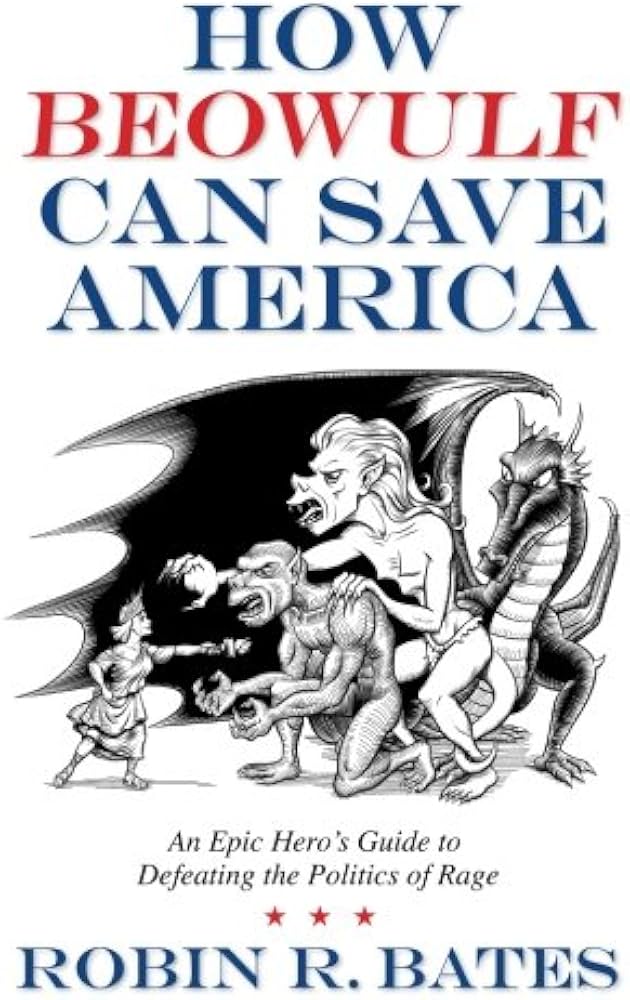
“Beowulf” teaches us that rewarding extremism encourages rather than moderates it. The GOP should not therefore be rewarded with the presidency.
Rumi honors the Muslim holiday of Eid Al-Adha, which centers on the story of Abraham and Isaac.
Political campaigns have come to be seen as competing narratives, providing those who understand fiction with special insight.
In his evasiveness and malleability, Romney resembles the Greek sea god Proteus.
Obama’s journey over the past four years has been Beowulf’s journey, both in its high points and in its low.