Developing what John Keats described as negative capability can help students be more successful in college.
Sherman Alexie’s “The Absolutely True Diary of a Part-Time Indian” offers a response to those who want to blame the recession on the poor.
Describing a high school English class that he teaches, Carl Rosin draws on the American Transcendentalists as he insists that his students live lives of integrity. His final assignment requires them to put what they have thought and read into action.
When one has been fasting for Ramadan, one becomes attuned to spiritual dimensions of the world that elude our full-bellied selves. Kazim Ali captures the experience in a number of his poems.
Abraham Verghese uses the tightly strung rackets of Swedish tennis great Bjorn Borg as a metaphor for the state of his marriage, pushed to the breaking point by his workaholism.
In the 1930′s, Americans’ rage over the Great Depression was reflected in the movies. In today’s economic meltdown, Hollywood is once again producing angry films.
Rightwing attacks on Obama for including novels in his summer reading are all wrong. We want our presidents to be balanced and grounded, and good fiction helps one remember what is really important in life.
Posted in Franzen (Jonathan), Huxley (Aldous), Verghese (Abraham) | Tagged Abraham Verghese, Aldous Huxley, Barack Obama, Brave New World, Cutting for Stone, Environment, Freedom, Jonathan Franzen, politics, Reading lists |
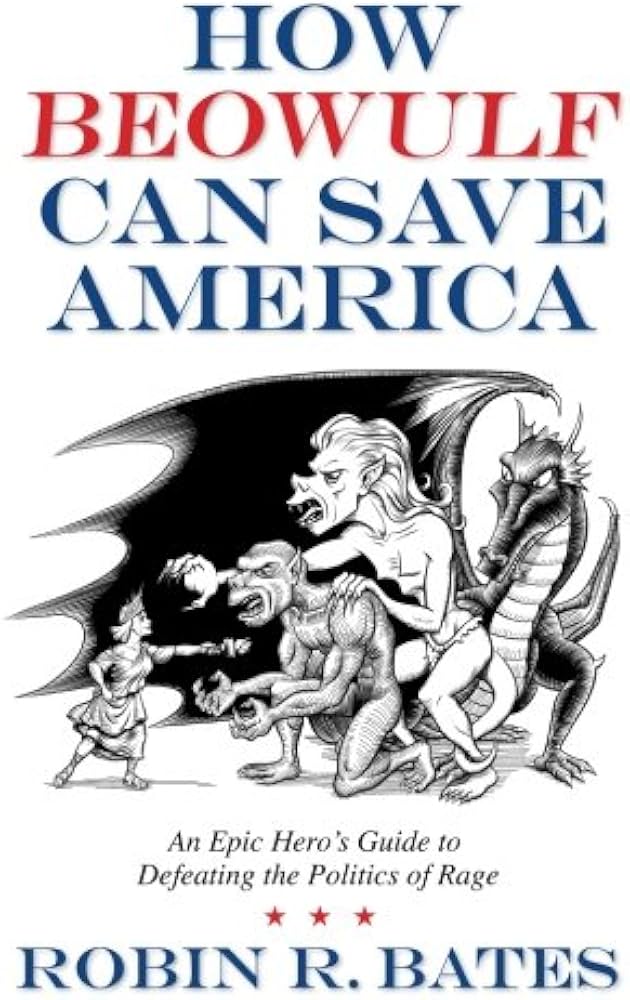
When subjected to the Beowulf test on good leadership, Obama scores surprisingly well.
A playful passage in a recent New Yorker story by Julian Barnes (“Homage to Hemingway”) has me imagining author food preferences.
Frank Norris’s naturalist 1901 novel “The Octopus: A Story of California” provides us a powerful lens through which to view the growing income discrepancy and the rollback of workers’ rights and benefits that we are seeing in the United States today.
American Muslim poet Kazim Ali explores the spiritual dimensions of fasting in his poetry collection “Fasting for Ramadan.”
Robert Francis’s poem “The Base Stealer” helps us appreciate the exquisite tensions between the base runner and the pitcher.
“Babette’s Feast” is about a sumptuous banquet that descends upon a querulous community like an act of grace, thereby allowing the spirit to flow again. In other words, it’s a good film to watch these days when our own communities are troubled and having difficulty coming together.
Warren Buffett’s op-ed article that the wealthy should pay more taxes is reminding me of Charles Dickens’ benevolent philanthropists, especially Mr. Brownlow in “Oliver Twist.”
Raised in Michigan and once a factory worker, Philip Levine, our new poet laureate, often writes about rustbelt desolation, as he does in “An Abandoned Factory, Detroit.”
Republican brinksmanship in the halls of Congress these past few weeks has been reminding me of Grendel rampaging through Heorot Hall in “Beowulf.”
Reading a poem like Emerson “Brahma”’ is a good occasion to remind ourselves that the oppositions in life that tie us into knots are not all that there is to existence.
Like the hero of “The Bhagavad Gita,” Tiger Woods has lost his way in the self. A truly epic drama would be whether he can relocate his “perfect swing.” By which I mean his authentic self.
Seen in the most positive light, Obama has chosen to be a mountain rather than an attack dog. The movie scene that comes to mind is Kurosawa’s shadow warrior trying to be a “mountain” in “Kagemusha.”
The mother in Janice Mirikitani’s poem feels joined to her daughter by the red thread she uses to sew her wedding slippers.
In Aristophanes’ great anti-war comedy, the women of Greece, led by Lysistrata, stage a sex strike, which gives them the leverage they need to end the Peloponnesian War. Currently there is a sex strike underway in a remote village in Columbia.
Homer gains Fielding’s admiration by his ability to move seamlessly between epic grandeur and “the shameless dog of the belly.” Perhaps it is Homer’s dexterity that gives Fielding the idea for his own contribution to “Great Eating Scenes in Literature.”
It’s not that either Sinclair Lewis’s Elmer Gantry or Texas Governor Rick Perry are religious hypocrites. It’s just that they conflate their religious beliefs with their earthly desires.
Poet Nomi Stone, while studying an ancient Jewish community in Tunisia, also attempted to understand the Muslim neighbors. “Many Scientists Convert to Islam” describes her exploration of Ramadan.
In his poem, Robert Francis compares the interaction between poet and reader to two boys playing throw and catch.
Did President Obama get rolled in the recent budget negotiations? The possibility that he did brings to mind a film about another naive politician, Frank Capra’s 1939 “Mr. Smith Goes to Washington.”
The Syrian president’s assault on his people reminds me of Lord Bryon’s poem “The Destruction of Sennacherib,” where a superior force is defeated by the cause of justice. Time will tell whether this is no more than a fantasy.
Rhinos are killed for their horns, which are falsely believed to be a powerful aphrodisiac. Knocking off RINOs, or Republicans in Name Only, is proving an intoxicating political sport of its own.
My son’s marriage proposal to his Trinidadian girlfriend has become bound up in my mind with a Mary Oliver poem about blackberries.
Jonathan’s Franzen’s “Freedom” is written in the John Cheever-John Updike-Tom Wolfe-Don DeLillo tradition, an up-close look at American middle class culture. But it leaves out some of the heroic struggles that are going on.