Friday – A Life Lived in Literature, 36th Installment
I was blessed beyond all measure to have had a career teaching at a public liberal arts college whose mission I believed in and where I had the flexibility to teach a wide variety of literature and writing courses. Whenever, as a faculty member, I was asked to fill out a “job satisfaction” survey, I could never reply with anything but the highest marks. I put a tremendous amount of time and effort into creating and teaching courses, so much so that other areas of my college service suffered. (For instance, I was a so-so department chair, except when it came to hiring good faculty, and an indifferent contributor to faculty meetings.) Serving students struck me as a sacred duty, and I was always grateful to competent administrators for allowing me to focus on my teaching.
As I am nearing the end of this memoir, I look back at the courses I taught in search of what they tell me about myself.
Every semester we taught three four-credit classes. Usually we taught either Composition or Intro to Lit, along with a 200-level survey class and a 300 or 400-level period/author/elective class. In my later years we added two-semester senior projects and first-year seminars.
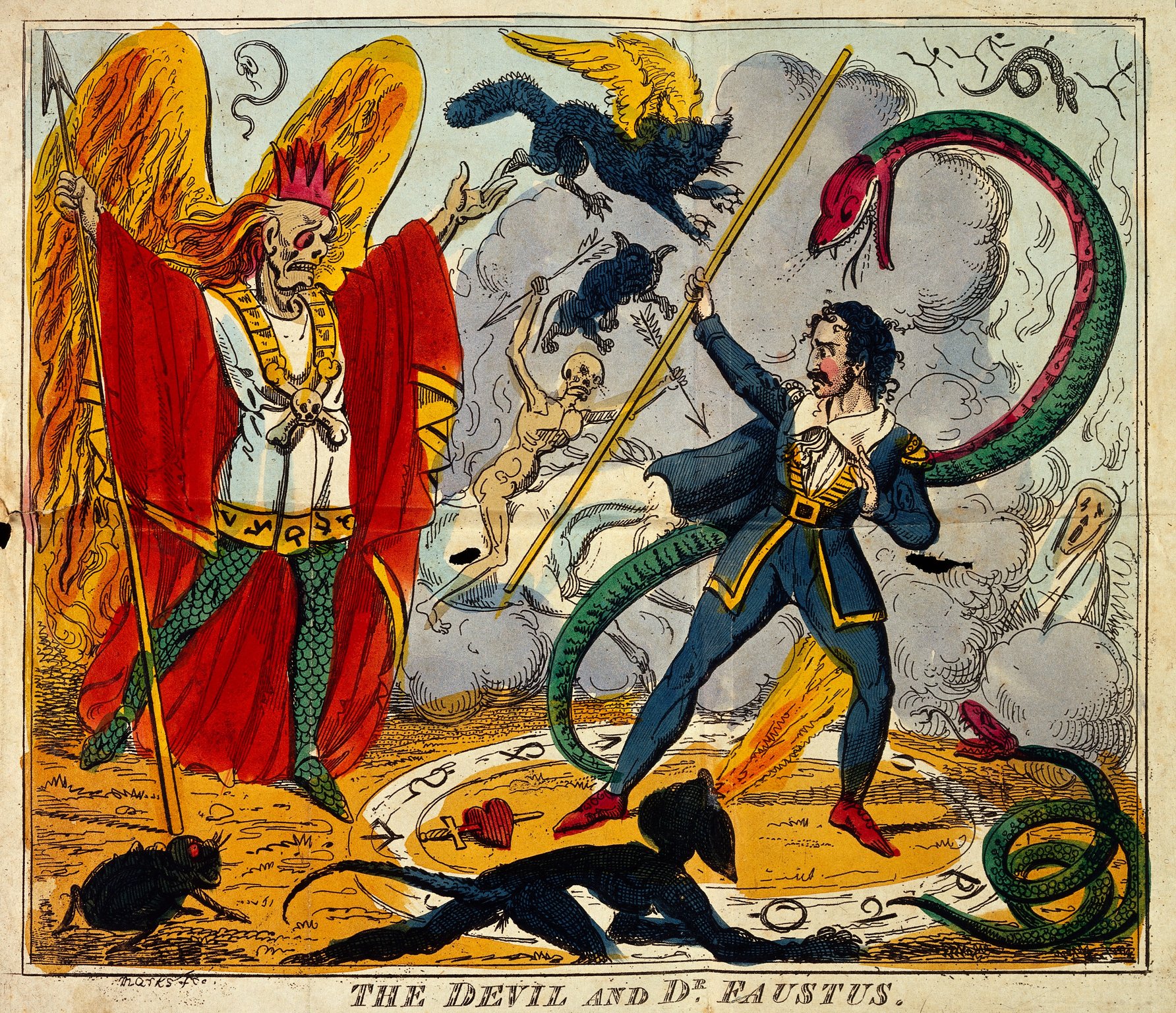
Being a small college, we could teach our grad school specialty only once every two years—a Restoration and 18thCentury British Literature course in my case. Since a normal semester had us teaching a general education course and a survey class, this meant we had three extra courses to play with in a two-year-cycle. The senior projects, for their part, had their own variety, and over the years I supervised projects on Beowulf, the Arthurian tradition, Charles Dickens, the Faustus/Faust tradition, Ann Radcliffe, Jane Austen, Charlotte and Emily Bronte, Kurt Vonnegut, Tom Stoppard, Tom Robbins, Milan Kundera, and Gail Godwin (to name a few), along with a number of film projects. The senior projects were very hands-on as I required my students to meet with me weekly.
By the end of my 36 years, I had taught all three of the Literature in History surveys multiple times. These comprised British Literature to 1700 (the class I taught most often), British and American Literature in the 18th and 19th centuries, and English-language literature of the 20th and 21st centuries. The surveys were among my favorite courses. I turned the first two into “greatest hits” courses and, for the third survey, found a work that could represent each significant historical period (Wilfred Owen for World War I, Great Gatsby and The Waste Land for the Twenties, Grapes of Wrath for the Thirties, Catch 22 for World War II, The Things They Carried for Vietnam, Handmaid’s Tale for feminism, Things Fall Apart and God of Small Things for post-colonialism).
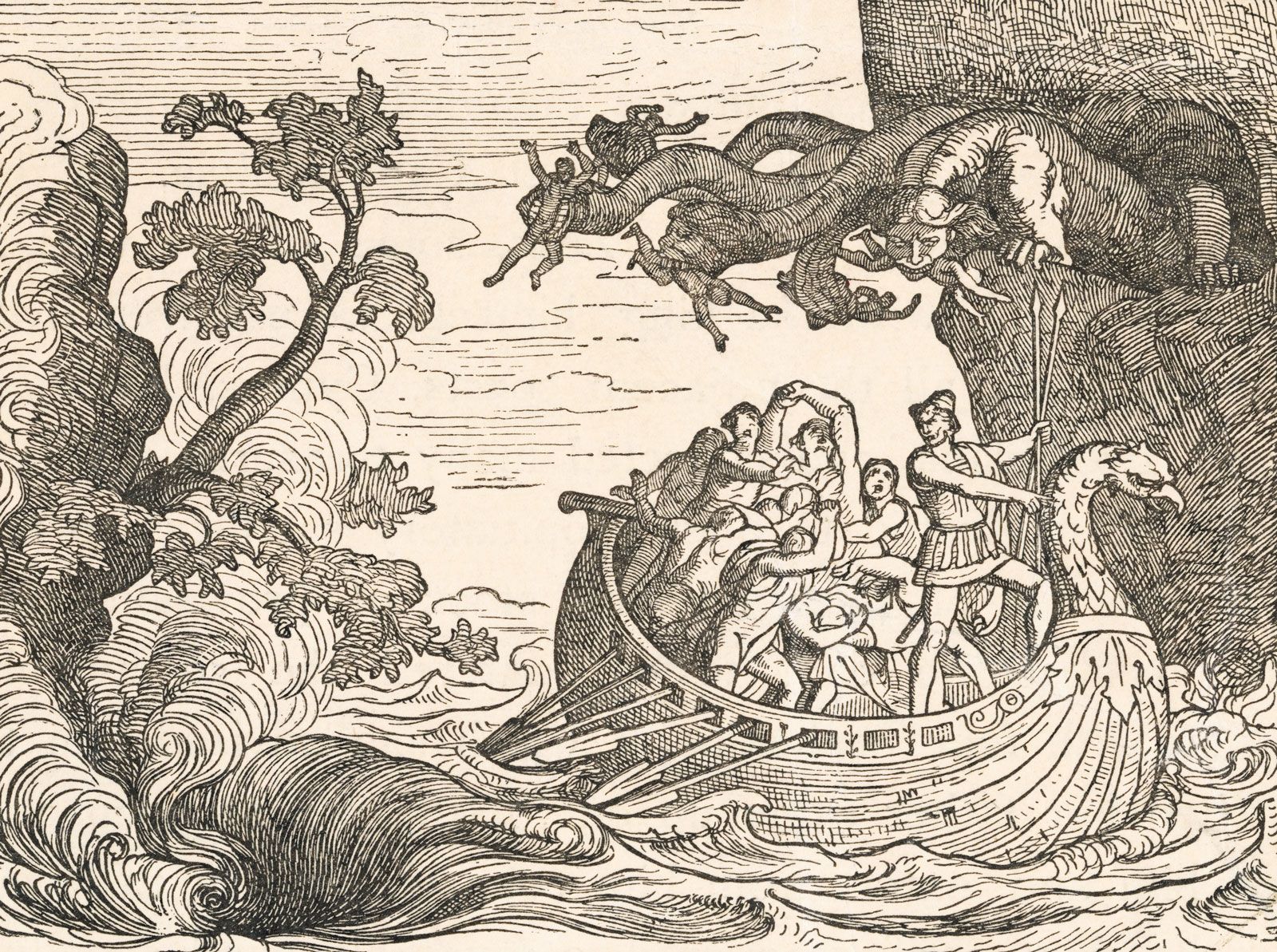
For Intro to Lit, which I also loved, I initially chose a fantasy literature focus (for which I included The Odyssey, Sir Gawain and the Green Knight, and Midsummer Night’s Dream) but eventually moved to a Nature focus after the college received a grant from the Pew Foundation.
My favorite course was my Restoration and 18th Century Literature course. I had chosen the period in graduate school on the grounds that any era that produced Tom Jones: History of a Foundling was worth studying, and I taught Henry Fielding’s novel every two years, challenging though that massive work proved to be. The author is a comic genius and fit nicely into the “Couples Comedy” theme that I ultimately settled on, as did Austen’s Sense and Sensibility. In the course we explored the dark anarchistic comedy of the Restoration and the milder comedy of the later “Age of Sensibility.” In one assignment I had the class apply different theories of laughter to the Restoration works. In another, they were to compare and contrast one of the 18th century works (which also included Pope’s Rape of the Lock and Fanny Burney’s Evelina) to a modern rom-com.
Later, once the school initiated first-year seminars, I spent several years teaching “Jane Austen and the Dating Game.” Oh, and I once taught an upper-level author class on the works that Austen’s characters are reading. (Austen is critical of most of them.)
What does it say about me that I have always preferred comedy to tragedy, including Shakespeare’s comedies to his tragedies? I think of Northrup Frye, who saw in plays like As You Like It, Midsummer, and The Winter’s Tale “the old ritual pattern of the victory of summer over winter” and “the death and revival of human beings.” Talking of the “New Comedy” of the Roman playwrights, he theorizes,
In all good New Comedy there is a social as well as an individual theme which must be sought in the general atmosphere of reconciliation that makes the final marriage possible. As the hero gets closer to the heroine and opposition is overcome, all the right-thinking people come over to his side. Thus a new social unit is formed on the stage, and the moment that this social unit crystallizes is the moment of the comic resolution. In the last scene, when the dramatist usually tries to get all his characters on the stage at once, the audience witnesses the birth of a renewed sense of social integration. In comedy as in life the regular expression of this is a festival, whether a marriage, a dance, or a feast.
My commitment to community and my general optimism probably leads me to love comedies. Perhaps my love also stems in part from my own privilege—I can afford to believe that all will come out right—although I have found myself questioning this preference. Towards the end, I fell a little out of love with Tom Jones, coming to see Fielding’s satire, especially at the expense of women and the lower classes, as arising out of a sense of gentry entitlement. In my last year, knowing that I would never again teach the course, I used the three weeks that I usually reserved for Tom Jones to instead teach, for the first time, Eliza Haywood’s Fantomina and Hannah Cowley’s The Belle’s Stratagem. Still, one could do worse than embrace Fielding’s wit and his open-hearted love of life.
I’ve written about how my love of fantasy as a child never left me, providing me a way to simultaneously escape from while indirectly engaging with a threatening world. In my final years, I started teaching courses in both American and British fantasy. In the American Fantasy class, I identified two strains of fantasy running through American literature, dark and light, with the interrelation of the two defining us as a country. (On the one hand, there is Poe, Hawthorne, Lovecraft, Stephen King, and Anne Rice, on the other L. Frank Baum and Disney.) I concluded the course with Louise Erdrich’s magical realist novel Tracks, which coming from a Chippewa author from a different tradition resisted this neat bifurcation.
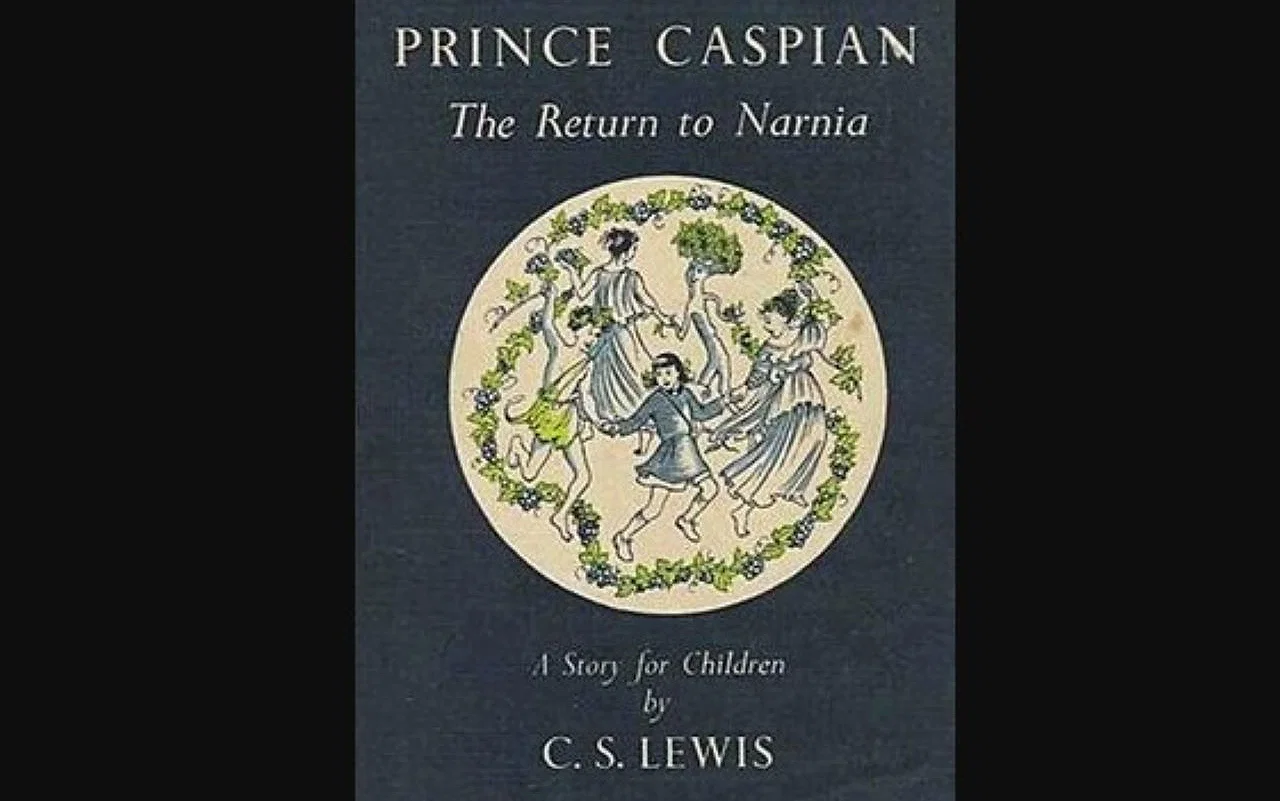
With British fantasy, meanwhile, I would begin with The Tempest, move on to Keats’s Eve of St. Agnes, and then plunge into the rich fantasy creations of the Victorians before concluding with C.S. Lewis, J.R.R. Tolkien, J.K. Rowling, Angela Carter, and Terry Pratchett.
In the spring of 2018 I wanted to teach an entirely new course before I retired and so created a course devoted to Magical Realism. My “world literature” course began with Gabriel Garcia Marquez’s One Hundred Years of Solitude and then moved on to Salman Rushdie’s Midnight’s Children, Toni Morrison’s Beloved, Laura Esquivel’s Like Water for Chocolate, and Haruki Murakami’s Wind-Up Bird Chronicle. I chose this last because I became enthralled with what I characterized as the Japanese author’s “existential fantasies.” I also chose Murakami as the topic of my final first-year seminar.
For years I taught the department’s Literary Theory class, eventually focusing just on the reader. (Before I had divided the class into theories of text, context, author, and reader.) This became an immensely important course for me and served as the foundation for my book. As we worked our way from Plato and Aristotle to W.E.B. Du Bois, Bertolt Brecht, Wayne Booth, and Martha Nussbaum, I had my students try out the different theories. We explored why audiences went ballistic over the subtitle of Tess of the d’Urbervilles: A Pure Woman and examined how Oscar Wilde’s opposing trial lawyer attacked Picture of Dorian Gray. For the class’s final essay, as I describe in my book, the students chose literary works that had “caused a commotion” and figured out why. I road-tested early versions of my book on the class.
There were a few other courses sprinkled among these: a “Literature of Madness” course team-taught with a psychologist; multiple film classes (including composition courses with a film theme); a “Technology and the American Dream” class, team-taught with a sociologist; “Literature of Revolution” and “Sexual Politics of the Novel” classes (taught in my earlier, more political days); Black Literature; Minority Literature; Victorian Novels; and Feature Writing.
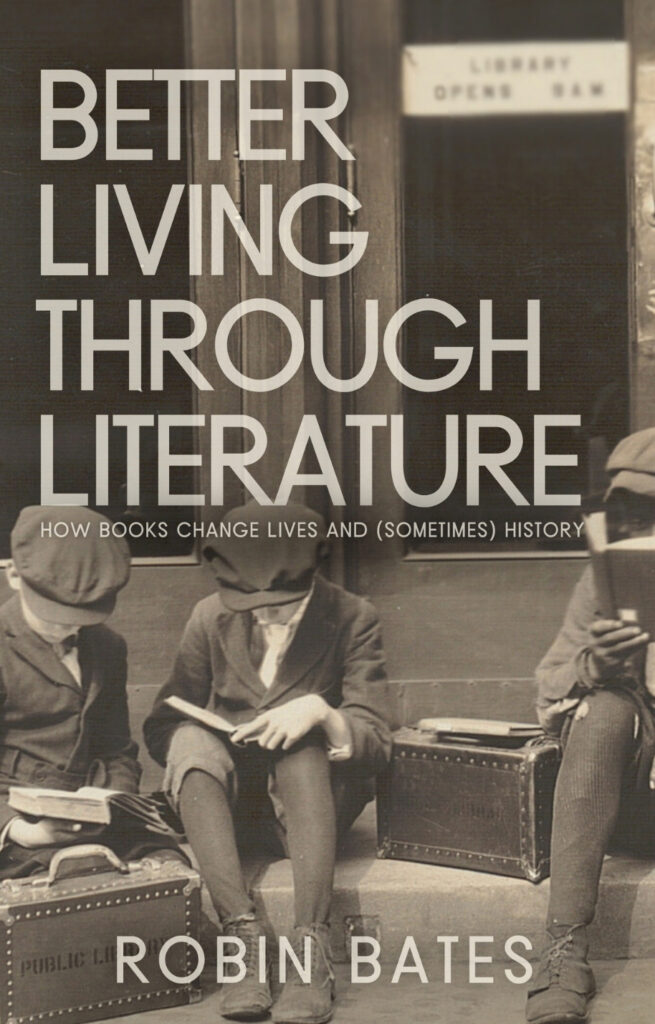
I’ve sometimes wondered whether my wide-ranging interests signaled a dilettante at work. Certainly, the path I took didn’t lend itself to my producing scholarship in my field of specialty, which is what people do at research universities. I was fortunate to be at a college that valued teaching over scholarship although St. Mary’s required some publications, and by the end I had 20 articles and a self-published book. But they were all stand-alone projects. My most significant publication, Better Living through Literature: How Books Change Lives and (Sometimes) History, I completed after I retired.
I sometimes wonder how my academic life would have been different had I focused on my “reader response” interests from the very first. I now realize that studying the impact of works on readers has been the throughline of my college teaching, even though I didn’t always realize it. So do I look back with Robert Frost’s regretful sigh about the wandering path that I chose?
A little. I am certainly proud of my son Tobias Wilson-Bates, who is far more focused than I ever was and who is producing ground-breaking work on Victorian time machine literature. My father was similarly focused in his work on the French poet Guillaume Apollinaire. I, by contrast, look like someone who could never make up his mind.
And yet, I carry so many rich memories of reading and teaching these works that my regrets exist only in a minor key. Furthermore, as my blog has become my classroom since retiring, I can see how my wide range provides me with a tool for almost every occasion.
Given that I haven’t stopped filling my toolbox—once I finish listening to Dombey and Son, I will have completed my collection of Dickens’s novels (excluding the unfinished Mystery of Edwin Drood)—it appears that I will stick to my eclectic approach to reading. Maybe, after all, this was the pathway I was destined to follow. I was just fortunate enough to find a college that allowed me to do it.
Past Installments of A Life Lived in Literature
A Life Lived in Literature: How It All Began (Sept. 5, 2025)
Early Reading Memories (Sept. 12, 2025)
Childhood Confusion: Reading to the Rescue (Sept. 19, 2025)
Confronting Segregation (Sept. 26, 2025)
School Reading vs. Real Reading (Oct. 10, 2025)
Childhood in Paris (Oct. 17, 2025)
My Time at Sewanee Military Academy (Oct. 24, 2025)
Existentialism for High School Seniors (Oct. 31, 2025)
Why I Majored in History, Not English (Nov. 7, 2025)
My College Search for Authenticity (Nov. 14, 2025)
On D. H. Lawrence and a Sexual Awakening (Nov. 21, 2025)
My Life as a Bildungsroman (Nov. 28, 2025)
Grad School: Literary Baptism by Fire (Dec. 5, 2025)
Early Scenes from a Marriage (Dec. 12, 2025)
Bringing Up Baby in Grad School (Dec. 19, 2025)
Grappling with Racism (Jan. 2, 2026)
Journal of a Young Teacher (Jan. 16, 2026)
Teaching and Reading in Yugoslavia (Jan. 23, 2026)
Life at 40: Barely Controlled Chaos (Jan 30, 2026)
From Secular Humanist to Christian Believer (Feb. 6 2025)
Looking Back at a Lifetime Together (Feb. 13, 2026)
To Ljubljana with Love (Feb. 20, 2026)
Forging a Separate Identity from My Father (Feb. 27, 2026)
“Better Living” Emerged from a Midnight Epiphany (March 6, 2026)
The Golden Years before Tragedy Struck (March 13, 2026)
Using Lit to Grapple with a Death (March 20, 2026)
Lit in the Year following Justin’s Death (March 27, 2026)
My Eldest Son, Named after a Keats Sonnet (April 3, 2026)
Sterne’s Uncle Toby and My Own Toby (April 10, 2026)
After the 2nd Death, a Book Project (April 17, 2026)
Making Lit Meaningful for Students (April 24, 2026)
Horizons Broadened (May 1, 2026)
Obama’s Election and a Blog Launched (May 8, 2026)
Expanding Outward at 60 (May 15, 2026)
On Losing My Father (May 22, 2026)